Hanamushi's Doll Adventure Beginner Guide: Route and First Puzzles
Learn the illustrated interface, follow the tree and house route, and keep wardrobe changes separate from puzzle progress.
Use the visible travel hands and wardrobe, then follow the named Tree Monster, Wall Posters, Pom-Pom Girl and Twins chapters. Keep acquired clothing separate from what the doll is currently wearing.
View reference image
On this page
Hanamushi’s Doll Adventure is easiest to understand as a sequence of illustrated scenes, clothing changes, and small visual puzzles. The official Roblox description asks you to control a doll and collect clothes, hats, and shoes. The October 13 recording by Roblox Master Guides shows how those activities connect: the doll travels between strange tableaux, opens a wardrobe, changes individual clothing pieces, and returns to earlier landmarks. Start by learning that loop rather than searching for a combat build or a currency farm.
This opening route uses the current Roblox experience, place 80764527426086, and a dated walkthrough of that same place. The source is Roblox Master Guides’ October 13 recording, not a firsthand playtest. Chapter times mark sections, including travel; use your visible arrangement when it differs from the recording.
First, recognize the screen you are controlling
The recorded game looks like an illustrated picture inside a stitched frame. The doll occupies the scene, while pointing hands near its upper corners indicate travel directions. A row of illustrated symbols sits below the play area. The wardrobe view replaces the landscape with a book-like collection screen and a large preview of the doll. These are useful visual anchors if you arrive expecting a conventional three-dimensional Roblox map.
Use the game’s visible interface for your device. The recording demonstrates a pointer interacting with scene objects and the wardrobe; it does not verify a universal keyboard shortcut or a particular mobile gesture. If a normal Roblox movement key produces no useful result, inspect the pointing hands and objects in the illustrated frame before assuming the game has stopped responding. Do not reset progress as a first response to an unfamiliar screen.
On a new scene, identify three things: where the doll is standing, which directions are available, and what looks different from the surrounding scenery. A colored hanging object, movable picture, unusual roof tile, or character’s reaction is more useful than an assumed quest marker. Compare the scene before and after an interaction to decide whether the object changed your route or collection.
Build a small opening loop around the house and tree
The beginning of the chaptered recording moves through a toy-covered landscape, a pile of televisions, a tree with colored hanging pods, and the outside of a house. The house area also contains a conspicuous striped color marker. Treat those as landmarks you can recognize on a return visit. Use these pictures to remember which branch of the opening route you have already explored.
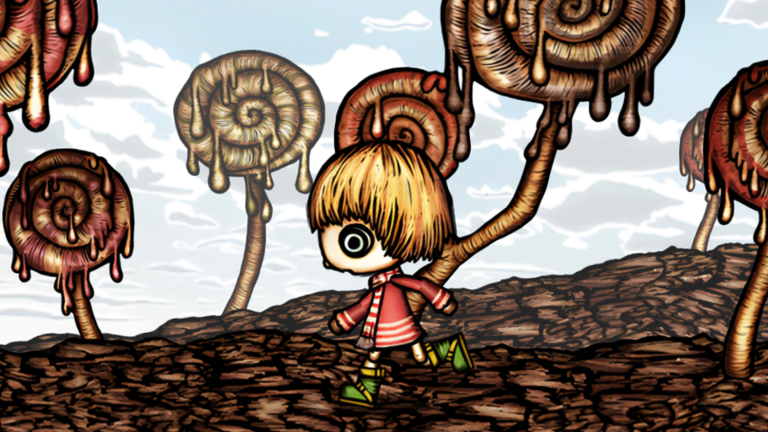
The first chapter is The Tree Monster, beginning at 0:00. The official badge record uses that same English name and describes making the tree monster smile. In the footage, the tree has a face, colored objects hang among its branches, and its appearance changes during the sequence. Watch its reaction after an interaction instead of clicking every pod in rapid succession. The scene is a puzzle with feedback, rather than a resource node to repeatedly harvest.
If you lose track, return to the nearby color marker and compare it with the objects in the tree scene. That is a practical way to organize what you can see. Compare the marker and tree colors in your own session before copying a sequence. The linked chapter supplies the recorded player’s selections for a closer visual comparison.
Before leaving an opening landmark, open the wardrobe once. Distinguish an item that is visible in the collection from the item currently circled or shown on the doll. Finding something and wearing it are different actions. The recorded route repeatedly changes clothing between scenes, so leaving a useful piece unequipped can make a familiar obstacle look unresolved.
The house exterior offers two different tasks
The walkthrough’s The Wall Posters chapter starts at 3:05. Its visual anchor is the wall outside the house, with several pictures below the windows. The official badge description says to solve the posters’ mystery. Work on that surface deliberately: compare the pictures and note which ones you have already selected. Do not confuse this exterior task with the later rooms inside the house merely because both are near the same building.
For a matching-style screen, a short position note is more reliable than a long verbal description of each drawing. For example, record a picture by its position and the feature you recognize. Follow the picture arrangement in your session when it differs from the video; a remembered screen coordinate can otherwise send you to the wrong poster.
The Pom-Pom Girl begins at 3:45. The girl is recognizable by the large moving head in the house frontage, with hands in the windows behind her. This is a separate interaction from selecting the wall pictures. The sequence is visually timed, so watch a complete movement before making repeated inputs. If you are unsure which character the badge refers to, use the chapter and the official name together rather than relying on a translated nickname from an older guide.
The opening footage subsequently shows the doll wearing a blue dress as it visits the house. Use the wardrobe to inspect your actual acquired clothes and reproduce the visible outfit when comparing that part of the route. Check for a changed scene or collection state before leaving this interaction. That feedback is more useful than counting repeated inputs on the house frontage.
Compare the twins’ rooms before leaving the house
House of the Twins starts at 4:22. The interior has a seated long-nosed figure, stairs, a clock, pictures, a hanging light, a table, and a teapot. The recording visits the related room arrangements and then returns through the house. These landmarks give you a much better recovery point than a direction such as “go to the next room,” which is hard to use after a break.
Compare the arrangement and orientation of corresponding objects, including their relationship to the seated figure. Treat it as a visual comparison task, and change one element before checking the other room again. A small sketch of the two layouts prevents you from repeatedly changing an object that already matches the intended relationship. The puzzle route uses the same comparison method for the later mechanisms.
When the house sequence is finished in the recording, the doll has additional headwear and later reaches the horned pair and the robot area. Do not treat opening the house as the end of the whole game. It is an early checkpoint in a much longer costume-and-puzzle route.
Choose your next objective without losing your place
At this point, choose between progressing to the next puzzle and checking the clothes you have already seen. The puzzle route follows the chaptered sequence from Robot Factory onward. The costume completion guide explains the wardrobe, the 48-costume target, and why reaching the story ending is a different objective from filling the collection.
Before taking a break, note your current landmark, the next official badge name you are pursuing, and your equipped head, body, and shoes. Those three details preserve the part of the route that matters. A note saying “near the strange character” is much less useful in a game where almost every scene contains one.
If the recorded route and your game diverge, first compare the place ID, scene, and outfit. Then check the source date. This game shares its name and visual heritage with much older Hanamushi material on the web, so an old Flash walkthrough is not automatically evidence for a current Roblox requirement. Use the exact Roblox links on this page when returning to the game.
Step-by-step guide
- Recognize the illustrated interface
Use the visible travel hands and wardrobe rather than assuming conventional three-dimensional controls.
- Follow the named opening scenes
Compare Tree Monster, Wall Posters, Pom-Pom Girl and the Twins with the dated chaptered route.
- Check your acquired and equipped clothing
Record your current landmark and outfit before moving into the next puzzle or a collection sweep.
Quick reference
Useful route checkpoints
| Player task | Recorded chapter | Next guide |
|---|---|---|
| Start exploring | Tree Monster — 0:00 | Opening route |
| Enter the house route | Wall Posters — 3:05; Pom-Pom Girl — 3:45 | Opening route |
| Read a mechanism | Robot Factory — 5:23; Nine Eyes — 7:14 | Puzzle route |
| Follow later puzzles | Snail — 9:34; Bug — 12:11; Bulb Birds — 13:32 | Puzzle route |
Video evidence
Watch creator walkthroughs alongside this guide. Check the recording date before following requirements that may have changed.
Roblox HANAMUSHI'S DOLL ADVENTURE Walkthrough | All Costumes and Badges
Opening interface and the first four named puzzle chapters.
ROBLOX - Hanamushi's Doll Adventure - ALL BADGES - [Full Walkthrough]
A separate full route through the exact Roblox place, useful for comparing transitions and badge-oriented progress.
FAQ
Where should a new player begin?
Use the visible travel hands and wardrobe, then follow the named Tree Monster, Wall Posters, Pom-Pom Girl and Twins chapters. Keep acquired clothing separate from what the doll is currently wearing.
Are old Hanamushi walkthroughs current Roblox evidence?
Not automatically. This page uses the exact Roblox place and dated recordings; older Flash solutions are not substituted for missing current proof.
Sources
Recheck these links whenever the game version, release status, or strategy changes.
- Official game listing The exact Roblox experience; identity and clothing objective.
- Official badge API Badge IDs, names and descriptions checked October 16, including the Game Clear language conflict.
- Chaptered Roblox gameplay, October 13 Scene and wardrobe evidence from the exact game.
- Second Roblox walkthrough, October 9 Independent dated footage; its title alone is not proof of every pickup.